
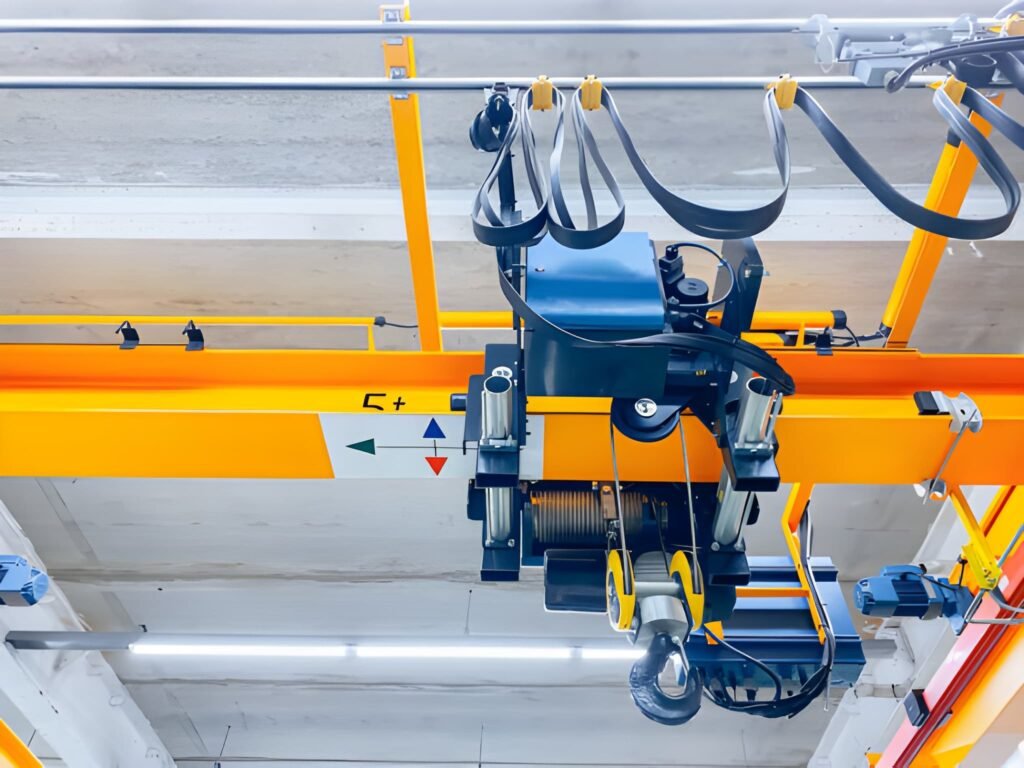
An EOT crane, or Electric Overhead Travelling crane, is an electrically powered overhead lifting system designed to move heavy materials safely and efficiently within industrial environments. Commonly used in manufacturing, shipyards, power plants, and warehouses, EOT cranes improve productivity, reduce manual labour, and enhance overall workplace safety.
Types of Electric Overhead Travelling (EOT) Cranes
Single Girder EOT Cranes
These feature a single girder and are ideal for light to medium-duty applications. They are cost-effective, have lower dead weight, and offer compact dimensions—making them suitable for small workshops, fabrication units, and general-purpose handling. Choosing the right equipment from a trusted gantry crane manufacturer in Dubai ensures optimal performance, durability, and safe operation in demanding industrial environments.
Double Girder EOT Cranes
Built for heavier loads and larger spans, double girder cranes provide higher lifting capacity, greater hook height, and improved stability. They are commonly used in heavy engineering industries, steel plants, and major machinery workshops.
Under Running (Underhung) Cranes
These cranes run on the bottom flange of runway beams and are installed in facilities with limited headroom.
Advantages:
- Efficient floor space utilisation
- Low headroom design
- Flexible layout and installation
Limitations:
- Typically limited to lighter capacities
- Requires strong building structure for suspension
Specialized EOT Crane Designs
- Hot Cranes – For extreme heat environments such as foundries
- Jib Cranes – Ideal for workstation-based lifting
- Gantry Cranes – Freestanding cranes used where roof structures cannot support overhead cranes
- Monorail Systems – For linear movement along a fixed track in production lines
- Girder Bridge Cranes – For wider spans and heavy-duty operations
How Do EOT Cranes Work?
EOT cranes operate using an electric-powered mechanism that travels along a fixed runway system. The crane bridge carries the hoist and trolley, enabling movement in three directions:
- Vertical: Hoist up/down
- Lateral: Trolley left/right
- Longitudinal: Crane bridge forward/backward
This three-axis movement allows precise lifting, positioning, and handling of materials.
EOT Crane Working Principle
The crane operates through electric motors connected to the hoist, trolley, and bridge mechanisms. Operators control movement using pendant controls or radio remotes. The hoist lifts the load, the trolley travels horizontally on the bridge, and the bridge itself moves along the runway—ensuring smooth, coordinated material handling.
Choosing the Right EOT Crane
Key factors to consider include:
- Required load capacity
- Span and lifting height
- Type of materials handled
- Operating environment (indoor, outdoor, corrosive, high-temperature)
- Installation space
- Budget and long-term usage requirements
Single Girder vs Double Girder: Which Is Better?
- Single Girder: Suitable for light to medium loads, cost-effective, simpler installation
- Double Girder: Best for heavy-duty use, larger spans, higher lifting height, enhanced durability
Applications of EOT Cranes
EOT cranes are widely used in:
- Manufacturing and assembly plants
- Steel and metal industries
- Power generation facilities
- Shipbuilding yards
- Warehousing and logistics operations
Can an EOT Crane Improve Your Business?
Yes. EOT cranes streamline material movement, reduce manual effort, and significantly boost operational efficiency. For businesses handling heavy loads or repetitive lifting tasks, EOT cranes are an essential investment.
Benefits of EOT Cranes
1. High Load Handling Capacity
Designed to handle loads from a few tonnes to hundreds, depending on configuration.
2. Improved Workplace Safety
Reduces manual lifting risks and ensures controlled, precise movement of heavy items.
3. Cost-Effective and Labour-Saving
Minimises reliance on manual labour and helps optimise workforce productivity.
4. Increased Productivity
Supports continuous operations, faster workflows, and reduced downtime.
5. Customisable for Specific Industries
Can be designed with specialized components, hoists, and controls for different sectors.
Maintenance Tips to Keep Your EOT Crane Running Smoothly
- Inspect hoists, gears, and wire ropes regularly
- Lubricate moving parts to reduce friction
- Check electrical connections for safety
- Schedule periodic servicing by certified technicians
- Maintain detailed logs of inspections and repairs
Safety Tips for Operating EOT Cranes
- Ensure only trained operators handle the crane
- Never exceed the rated load capacity
- Use proper communication and signalling
- Conduct pre-operation checks before each shift
- Keep the area under the crane clear
Ready to Upgrade Your Material Handling? Contact Dubai Cranes Today
At Dubai Cranes, we design and deliver high-performance EOT cranes tailored to the unique needs of industries across the UAE. Whether you require single girder, double girder, gantry, jib, or fully customized lifting systems, our engineering team ensures exceptional safety, durability, and efficiency. We provide complete solutions—from design and manufacturing to installation, testing, and ongoing maintenance.
Frequently Asked Question
What does EOT crane stand for?
EOT stands for Electric Overhead Travelling crane, an electrically powered overhead lifting system.
What is the difference between single and double girder EOT cranes?
Single girder cranes handle lighter loads, while double girder cranes are built for heavier loads and larger spans.
Can EOT cranes be used outdoors?
Yes. They can be designed with weather-resistant materials for outdoor use.
How do I maintain an EOT crane?
Regular inspections, lubrication, servicing, and proper record-keeping are essential for safe operation.
Can EOT cranes be customized?
Yes. Customization is available for different industries, load types, temperature conditions, and structural layouts.