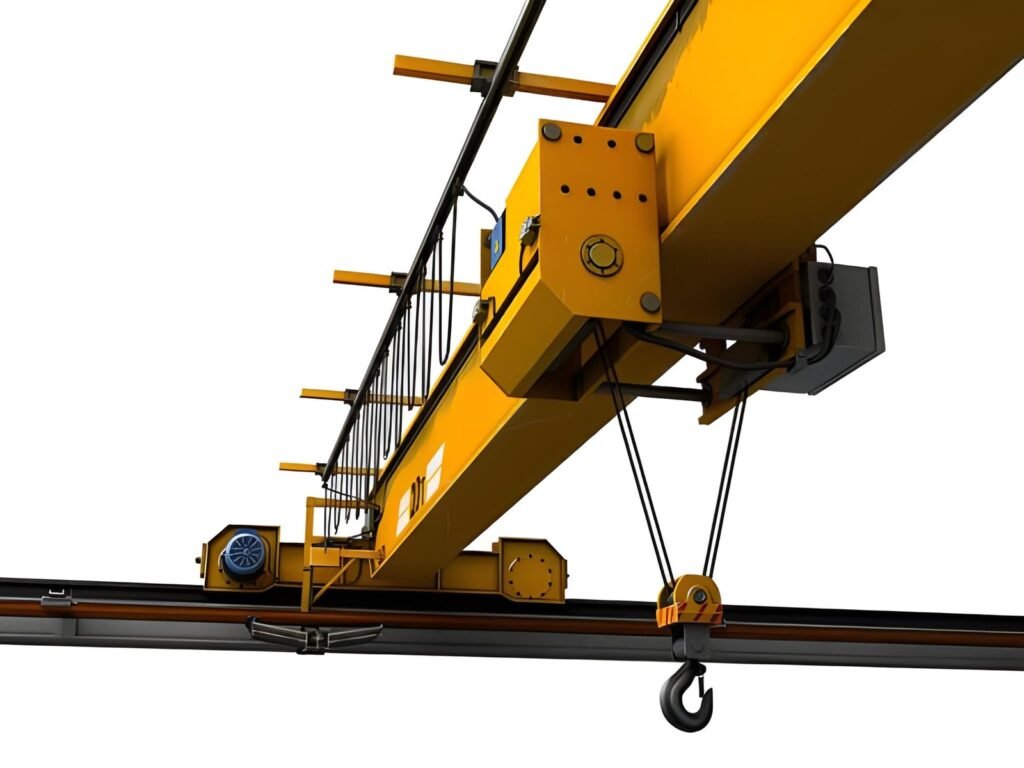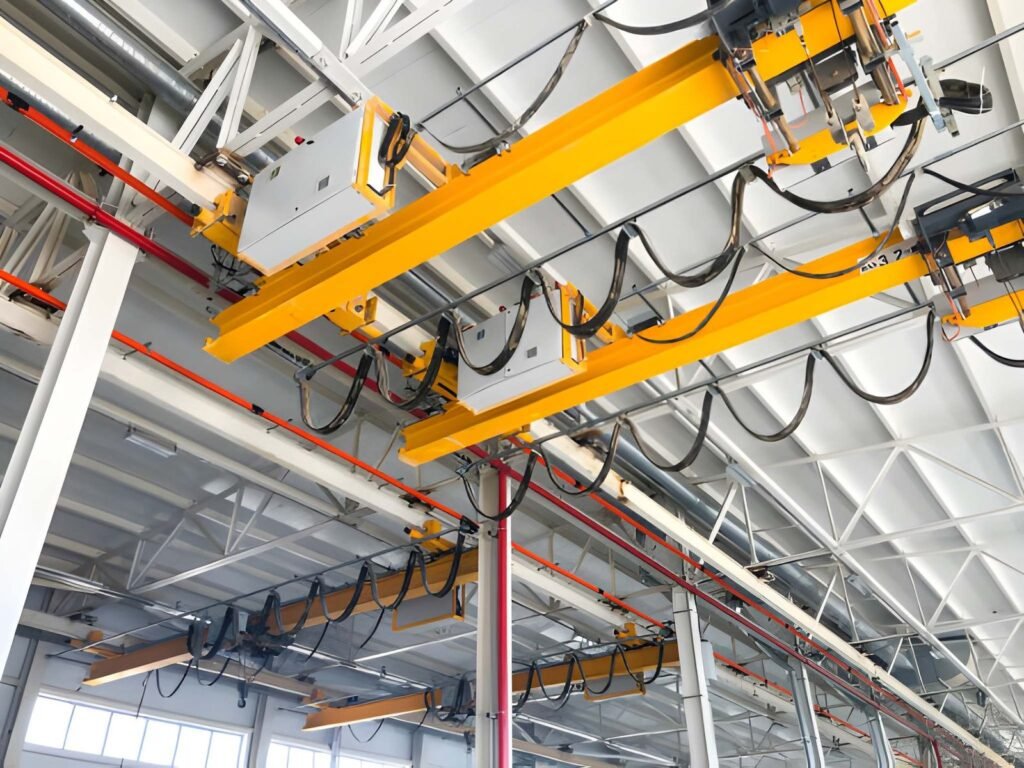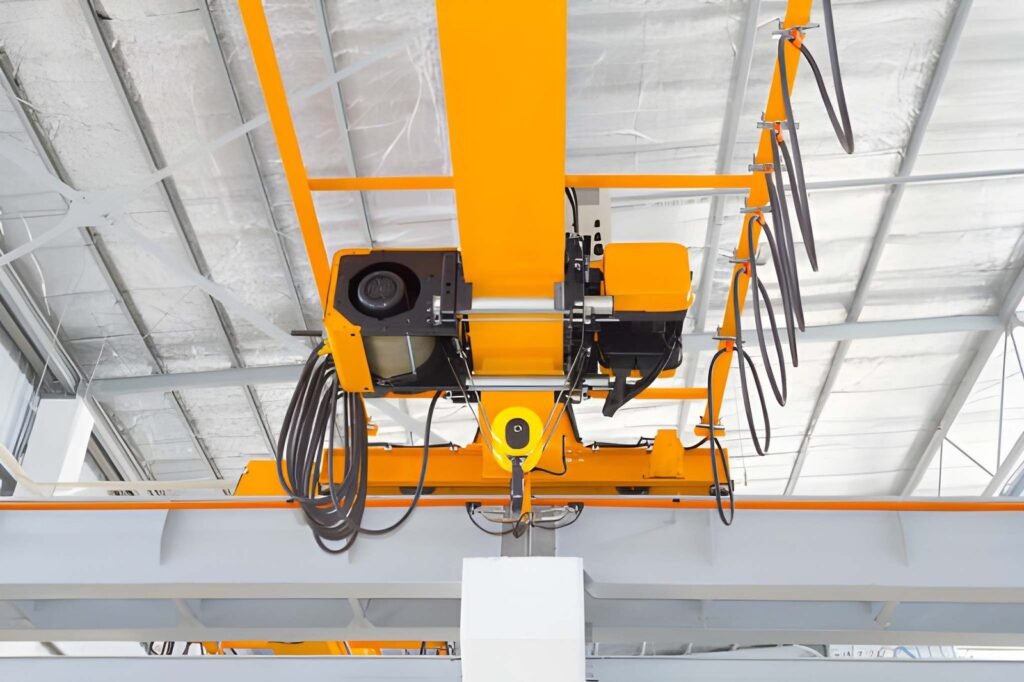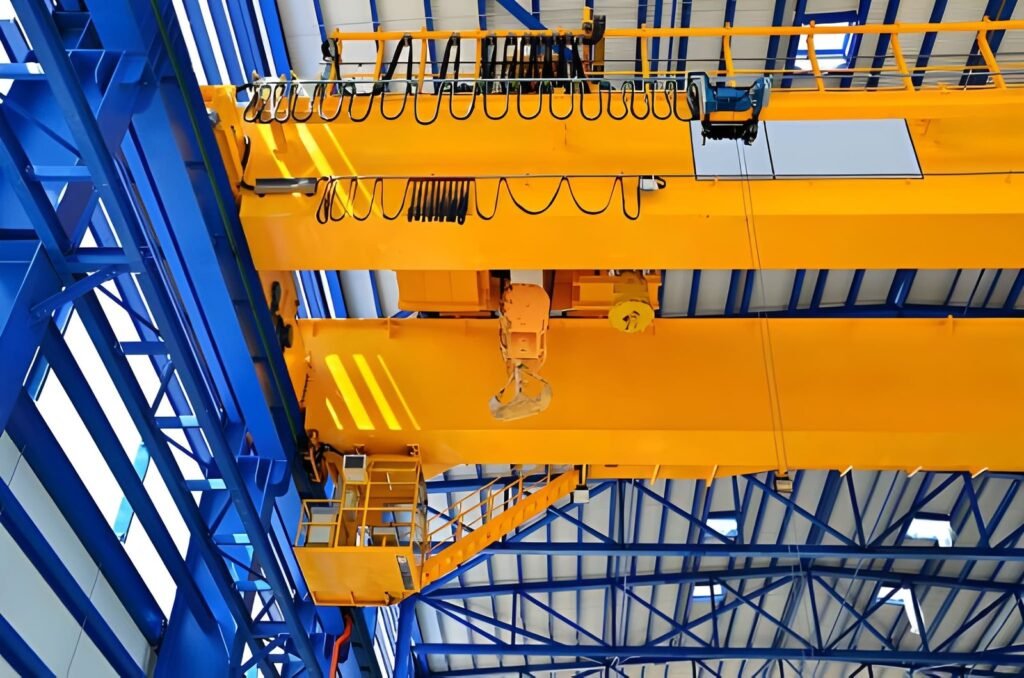

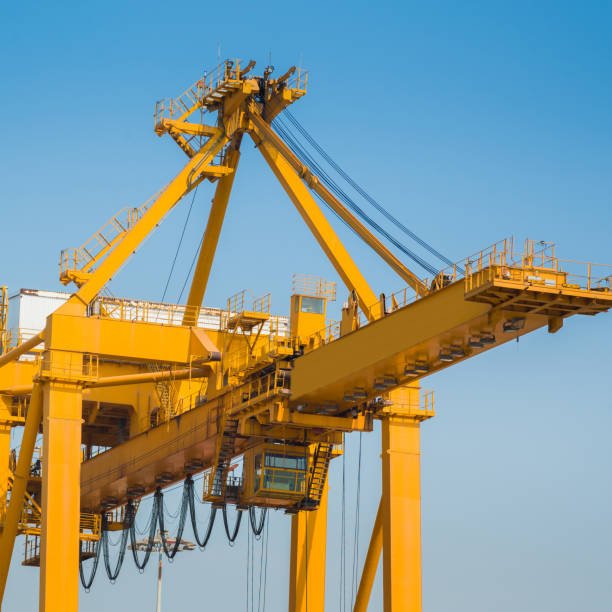
The main difference between EOT cranes and JIB cranes is their coverage area and lifting capacity. EOT cranes move across large overhead runways and handle heavy loads. JIB cranes operate within a smaller circular area and are used for lighter, localised lifting tasks.
EOT cranes and JIB cranes are both used for lifting heavy materials in factories and warehouses. However, they serve different purposes based on load capacity, workspace size, and operational needs. Understanding their differences helps businesses choose the right crane for safe and efficient material handling.
What Is a JIB Crane?
A JIB crane is a lifting device with a horizontal arm attached to a vertical support. It rotates to lift and move loads within a limited circular area. While JIB cranes are ideal for localized workstation lifting, larger operations that require wider coverage often use a Gantry Crane in Dubai for moving heavy loads across open floor areas or outdoor sites.
How Much Weight Can a Jib Crane Lift?
What Is an EOT Crane?
An Electric Overhead Travelling (EOT) crane is a large crane installed on overhead runways. It moves along rails and lifts heavy loads across wide areas. EOT cranes are used for heavy-duty industrial lifting.
Key Differences Between EOT and JIB Cranes
Coverage Area
- JIB crane: Covers a circular area around its base
- EOT crane: Covers a large rectangular factory area
Load Capacity
- JIB crane: Typically handles up to 5 tons
- EOT crane: Can handle loads exceeding 100 tons
Movement
- JIB crane: Rotates on a single axis
- EOT crane: Moves in multiple directions (forward, backward, and sideways)
Installation
- JIB crane: Mounted on walls or floor columns
- EOT crane: Installed on overhead runways
Cost
- JIB crane: Lower installation and maintenance cost
- EOT crane: Higher initial cost but better for large-scale operations
What is the difference between a crane and a jib crane?
When to Use a JIB Crane
JIB cranes are best for:
- Small workstations
- Assembly lines
- Machine shops
- Maintenance areas
- Light-duty lifting tasks
They are ideal where lifting is needed in a fixed location.
What’s the Difference Between a Jib and a Boom?
When to Use an EOT Crane
EOT cranes are suitable for:
- Large factories
- Steel plants
- Warehouses
- Shipyards
- Heavy manufacturing
They are used when lifting heavy loads across large areas.
How to Choose Between EOT and JIB Crane (Step-by-Step)
- Assess load weight
Determine the maximum load you need to lift. - Evaluate workspace size
Identify whether lifting is needed in one area or across the entire facility. - Consider installation space
Check if your facility can support overhead runways. - Review budget and scalability
Choose a crane that fits current needs and future growth.
Call to Action: Get Expert Crane Solutions from Dubai Cranes
Choosing between a JIB crane and an EOT crane depends on your load requirements, workspace size, and operational goals. The right crane system improves efficiency, safety, and productivity in your facility.
At Dubai Cranes, our experienced team provides professional guidance to help you select the most suitable crane solution for your operation. We assess your lifting needs, workspace layout, and long-term requirements to recommend a reliable and efficient system.
FAQs (People Also Ask)
Which crane is better, EOT or JIB crane?
It depends on your needs. JIB cranes are better for small areas. EOT cranes are better for heavy lifting across large spaces.
What is the main advantage of an EOT crane?
EOT cranes can move heavy loads across large distances and cover the entire facility.
What is the main advantage of a JIB crane?
JIB cranes are cost-effective and ideal for localised lifting tasks.
Can both cranes be used together?
Yes. Many factories use JIB cranes for workstations and EOT cranes for large material handling.
Author Details
Author: Industrial Equipment Specialist
Reviewed by: Mechanical Engineering Team
Expertise: Material handling systems and crane solutions
Last Updated
Last updated: 16 February 2026