

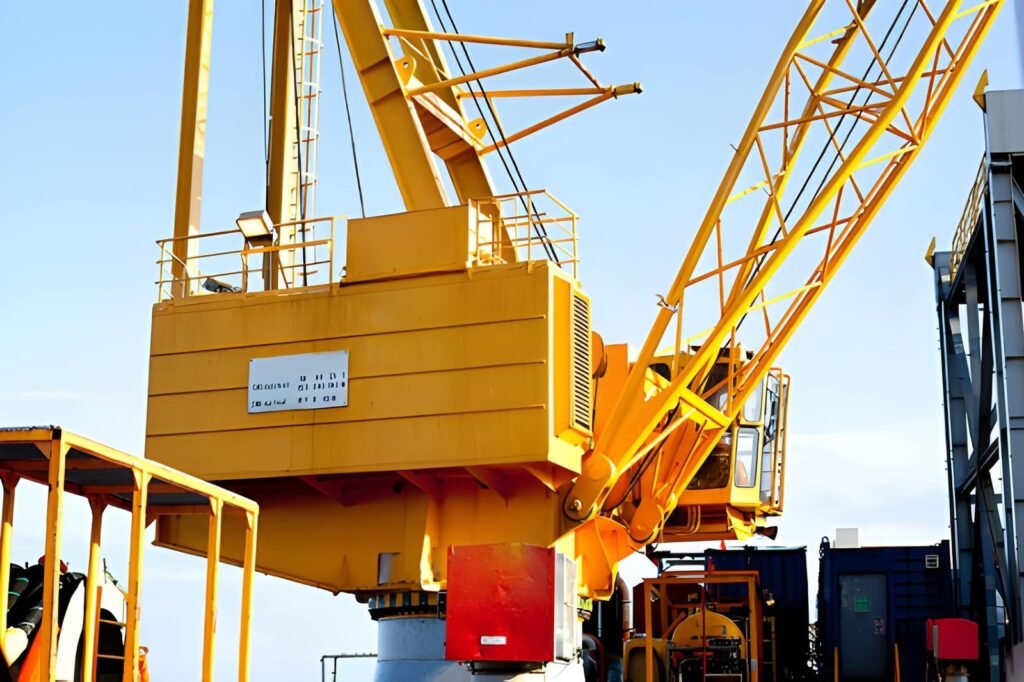
A Load Moment Indicator (LMI) is an essential safety system used in modern crane operations. It continuously monitors lifting conditions to ensure that the crane operates within its safe working limits. By tracking key load and stability factors in real time, the system helps prevent overloading, tipping risks, and mechanical failure during lifting activities.
Understanding Load Moment in Crane Operations
Load moment is a key engineering principle used to determine crane stability.
It is calculated by multiplying:
- The weight of the load
- The distance of the load from the crane’s centre of rotation
This combination creates a “moment” or tipping force. If this force becomes too high, the crane can become unstable. The LMI constantly checks this value to ensure it stays within safe limits.
How Much Weight Can a Jib Crane Lift?
How Does a Load Moment Indicator Work?
A Load Moment Indicator uses multiple sensors and a central processing unit to monitor crane conditions in real time.
It typically measures:
- Load weight
- Boom length
- Boom angle
- Working radius
- Hydraulic pressure (in some systems)
These inputs are compared with the crane’s safety chart stored in the system. If the crane approaches unsafe limits, the LMI activates warnings or automatic restrictions.
Key Components of an LMI System
A typical LMI system includes:
- Load sensors (to measure weight)
- Angle sensors (to track boom position)
- Length sensors (to measure extension)
- Pressure transducers (for hydraulic systems)
- Operator display panel
The data is displayed inside the operator cabin, giving real-time feedback on lifting conditions.
What is the difference between a crane and a jib crane?
What Does an LMI Do in Real Time?
The system continuously monitors crane performance and provides immediate feedback.
It can:
- Show current load percentage
- Warn when approaching capacity limits
- Trigger audible and visual alarms
- Restrict unsafe crane movements (in advanced systems)
This ensures operators can take corrective action before a dangerous situation occurs.
What’s the Difference Between a Jib and a Boom?
Why Is a Load Moment Indicator Important?
A Load Moment Indicator is critical for safe crane operation.
Main benefits include:
- Preventing crane overload
- Reducing the risk of tipping accidents
- Improving site safety compliance
- Protecting equipment from damage
- Supporting operator decision-making
Without an LMI, crane operations would rely solely on manual calculations, increasing the risk of human error.
Types of Cranes That Use LMIs
Load Moment Indicators are used in many crane systems, including:
- Mobile cranes
- Tower cranes
- Crawler cranes
- Rough terrain cranes
Each system is calibrated based on crane type, capacity, and working environment.
How an LMI Prevents Crane Accidents
An LMI helps prevent accidents by:
- Alerting operators before overload occurs
- Monitoring stability during lifts
- Preventing unsafe boom angles
- Reducing sudden structural stress
By acting as an early warning system, it significantly reduces the likelihood of crane failure or collapse.
What Happens When the LMI Shows a Warning?
When a warning appears, the operator must take immediate action.
Typical responses include:
- Lowering the load
- Reducing boom radius
- Adjusting crane position
- Stopping the lift entirely
Ignoring these warnings can lead to serious safety risks.
What to Do If an LMI Malfunctions
If the system fails or shows inconsistent readings:
- Stop all lifting operations immediately
- Report the issue to a qualified technician
- Inspect sensors and wiring
- Do not resume lifting until the system is verified
Operating without a functioning LMI is unsafe and often against regulations.
Difference Between LMI and Crane Camera Systems
While both improve safety, they serve different purposes:
- Load Moment Indicator: Focuses on stability, load weight, and safety limits
- Crane Camera System: Provides visual monitoring of load and surroundings
Many modern cranes use both systems together for maximum safety and control.
Maintenance and Calibration of LMI Systems
Regular maintenance is essential for accurate performance.
Best practices include:
- Routine calibration checks
- Sensor inspection and cleaning
- Software diagnostics
- Scheduled servicing
- Logging system performance data
Accurate readings are crucial for safe lifting decisions.
Training and Operator Responsibility
Even with advanced safety systems, operator skill remains essential.
Operators should be trained to:
- Interpret LMI data correctly
- Respond to alerts quickly
- Perform pre-lift safety checks
- Understand crane load charts
Technology supports safety, but human judgment ensures it.
Conclusion
A Load Moment Indicator is one of the most important safety systems in crane operations. Continuous monitoring of load conditions and crane stability helps prevent accidents, protect equipment, and ensure safe lifting practices on construction and industrial sites. When combined with proper training and maintenance, it plays a vital role in modern crane safety management.
Call to Action: Improve Crane Safety with Dubai Cranes
At Dubai Cranes, we provide reliable crane systems, safety solutions, and expert support designed to improve lifting performance and reduce operational risks on site. Whether you are managing complex lifting operations or need guidance on Load Moment Indicator systems, our team helps ensure your equipment meets the highest safety and efficiency standards. Get in touch with Dubai Cranes today to enhance crane safety and keep your operations running smoothly.
FAQs
What is the main purpose of a Load Moment Indicator?
It prevents crane overload by monitoring load weight and stability in real time.
Can a crane operate without an LMI?
Technically, yes in some cases, but it is unsafe and often not legally permitted for many crane types.
How accurate is an LMI system?
Modern systems are highly accurate but require regular calibration and maintenance.
What triggers an LMI alarm?
Exceeding safe load limits, unstable boom angles, or unsafe operating conditions.
Is an LMI the same as a load chart?
No. A load chart is manual reference data, while an LMI provides real-time digital monitoring.