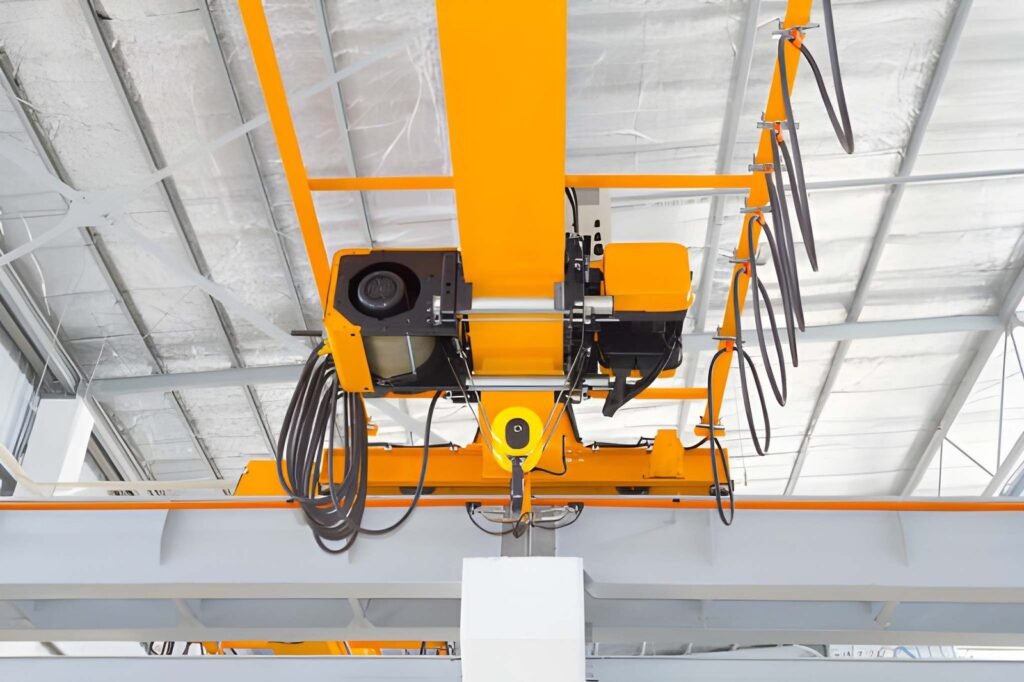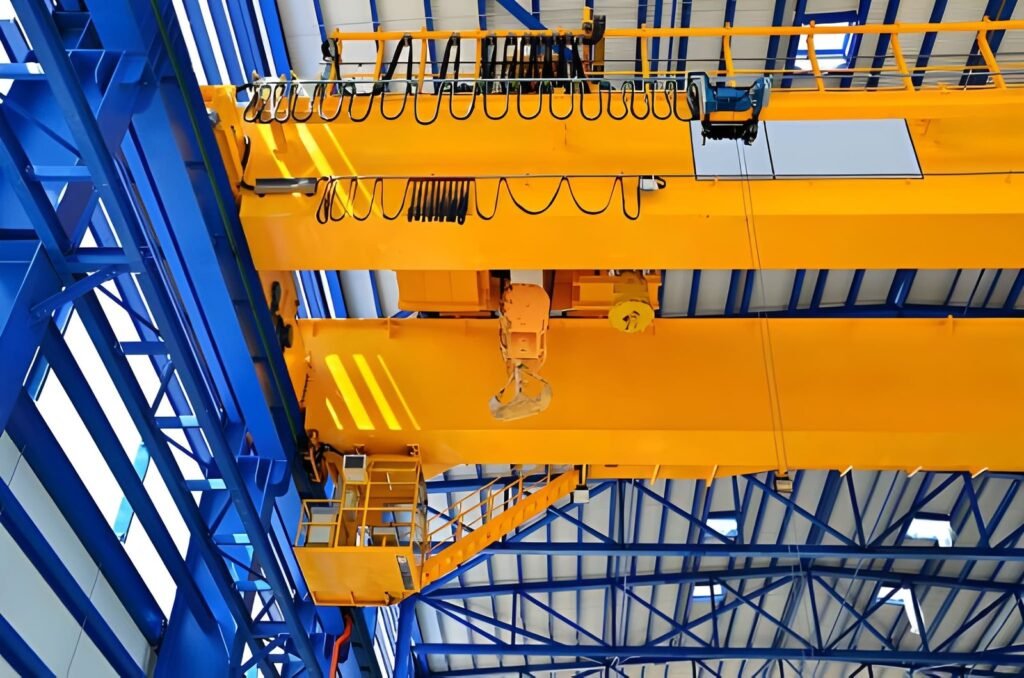

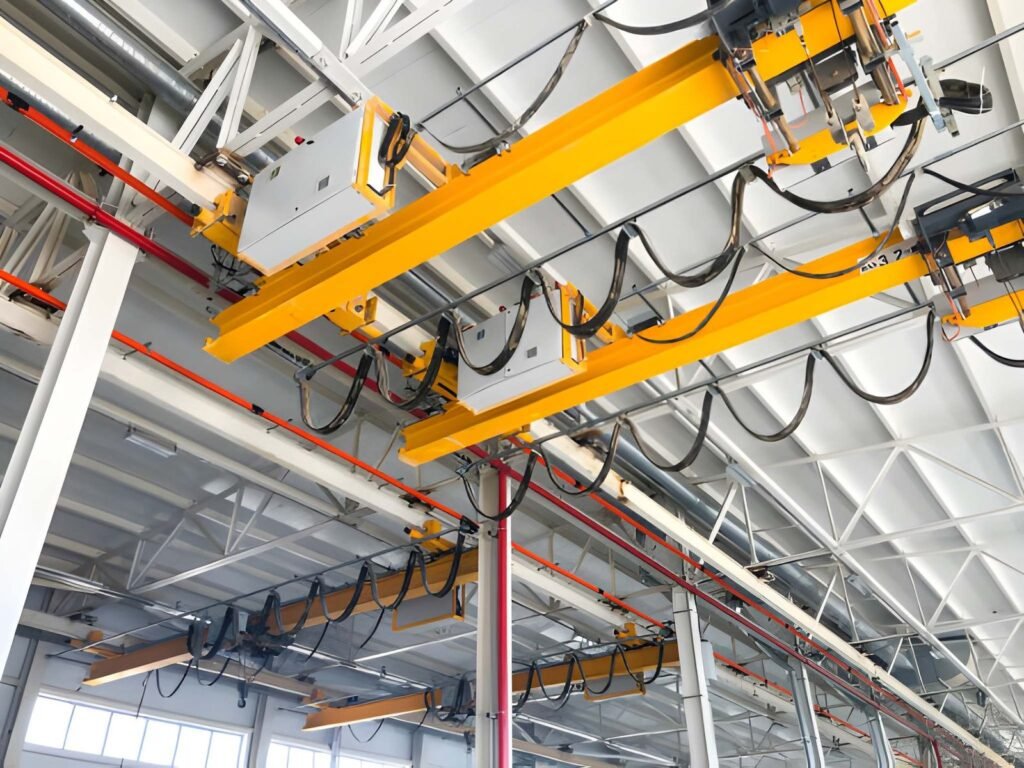
EOT cranes and gantry cranes serve similar lifting purposes but differ in structure, mobility, and application. EOT cranes are ideal for fixed, heavy-duty indoor operations, while gantry cranes offer flexibility and outdoor usability. Choosing the right system depends on load, space, and operational needs.
Choosing between crane systems can impact efficiency, safety, and long-term costs. EOT cranes and gantry cranes are widely used across industries but serve different purposes. Understanding how each works helps you make a smarter investment. This guide explains their differences in simple terms so you can decide confidently.
What is an EOT Crane?
Explore high-performance EOT cranes in Dubai. Learn about features, benefits, applications, and why they’re ideal for heavy-duty indoor lifting.
What is a Gantry Crane?
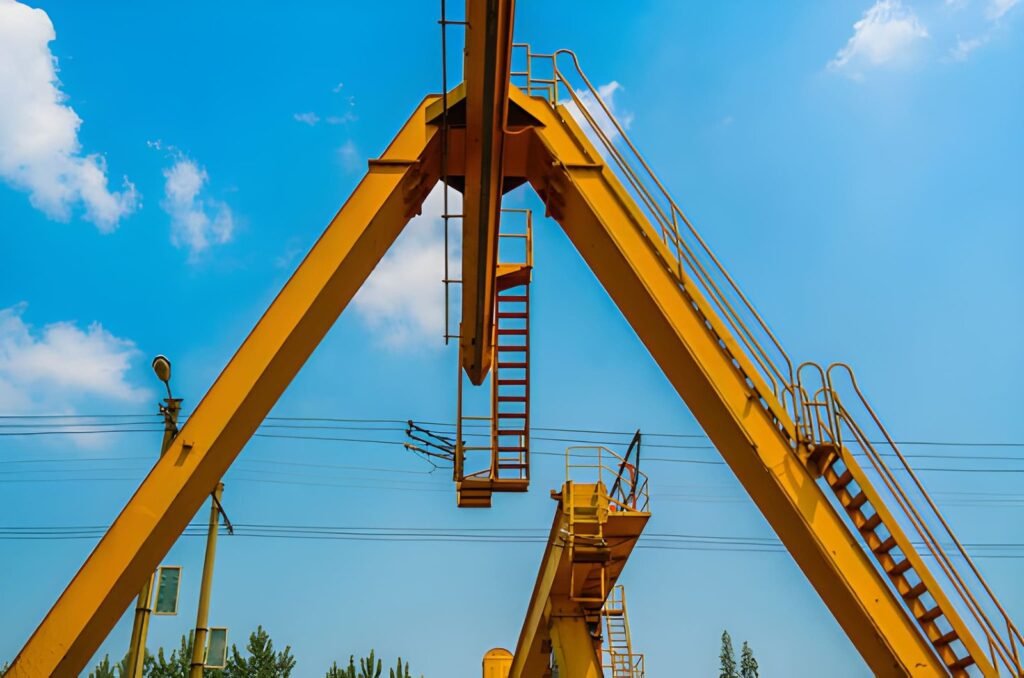
A gantry crane is a lifting system supported by freestanding legs that move on rails or wheels. It does not rely on building structures, making it suitable for both indoor and outdoor use. Gantry cranes are known for flexibility and mobility.
How Much Weight Can a Jib Crane Lift?
Key Differences Between EOT and Gantry Cranes
Structural Differences
- EOT cranes are mounted on building structures
- Gantry cranes are self-supported with legs
Installation Requirements
- EOT cranes need strong structural support
- Gantry cranes require minimal setup
Mobility and Flexibility
- EOT cranes are fixed
- Gantry cranes are movable and relocatable
Load Capacity
- EOT cranes handle heavier loads
- Gantry cranes are ideal for light to medium loads
What is the difference between a crane and a jib crane?
Environment Suitability
- EOT cranes: Indoor use
- Gantry cranes: Indoor and outdoor use
Space Usage
- EOT cranes save floor space
- Gantry cranes require ground space
Pros and Cons
EOT Crane Advantages
- High lifting capacity
- Ideal for repetitive tasks
- Space-efficient design
- Long lifespan
EOT Crane Limitations
- High installation cost
- Fixed position
- Requires building support
Gantry Crane Advantages
- Highly flexible
- Easy to relocate
- Works outdoors
- Lower setup cost
Gantry Crane Limitations
- Lower capacity
- Weather exposure risk
- May need frequent maintenance
What’s the Difference Between a Jib and a Boom?
Step-by-Step: How to Choose the Right Crane
- Assess Load Requirements
Determine weight, size, and lifting frequency - Evaluate Your Space
Check ceiling height and floor availability - Decide on Mobility Needs
Choose fixed (EOT) or flexible (gantry) - Consider Budget
Include installation and maintenance costs - Check Environment
Indoor use favors EOT; outdoor favors gantry
Performance Comparison
EOT cranes provide better precision and higher lifting capacity. Gantry cranes offer more flexibility and adaptability. The best choice depends on whether your priority is power or mobility.
Installation and Maintenance
Proper installation ensures safety and efficiency. Regular inspections reduce risks and downtime. Outdoor gantry cranes may require more frequent maintenance due to environmental exposure.
Other Crane Types to Consider
- Jib cranes for workstation lifting
- Monorail cranes for straight-line movement
- Freestanding cranes for open areas
- Bridge cranes for large production spaces
Get Expert Crane Solutions in Dubai
Looking for reliable crane systems? Dubai Cranes provides high-quality EOT and gantry crane solutions tailored to your business needs. Our experts help you choose, install, and maintain the right system for maximum efficiency and safety. Contact us today to get started.
FAQs
What is the main difference between EOT and gantry cranes?
EOT cranes are fixed to a building structure, while gantry cranes are mobile and self-supported.
Which crane is better for outdoor use?
Gantry cranes are better suited for outdoor environments due to their freestanding design.
Are EOT cranes more expensive?
Yes, they typically have higher installation costs due to structural requirements.
Can gantry cranes handle heavy loads?
They can handle moderate loads, but EOT cranes are better for heavy-duty lifting.
How often should cranes be inspected?
Visual checks should be done regularly, with professional inspections every 6–12 months.
Author
Industrial Equipment Specialist
Last Updated
April 1, 2026