
Modern logistics and shipping yards rely on speed, accuracy, and safety to keep goods moving efficiently. As global trade volumes continue to grow, ports and logistics facilities need equipment capable of handling larger cargo loads while reducing delays and operational costs. This is where cranes play a vital role.
From loading containers onto vessels to moving cargo throughout storage yards, cranes have become an essential part of modern logistics infrastructure. Their ability to lift, transport, and position heavy loads quickly helps businesses improve productivity, maximise throughput, and maintain smooth supply chain operations.
Why Cranes Are Essential in Logistics and Shipping
Shipping yards and logistics hubs handle thousands of containers and tonnes of cargo every day. Manual handling is simply not practical for operations of this scale. As a trusted Gantry Crane Manufacturer in Dubai, we understand how vital crane systems are for maintaining efficiency, productivity, and safety in modern cargo-handling environments.
Cranes provide a reliable solution by:
- Moving heavy loads quickly and efficiently
- Reducing loading and unloading times
- Improving workplace safety
- Minimising labour-intensive tasks
- Increasing cargo handling capacity
- Supporting round-the-clock operations
- Enhancing operational efficiency in busy ports and logistics centres
How Much Weight Can a Jib Crane Lift?
Faster Cargo Loading and Unloading
One of the biggest advantages of cranes is their ability to accelerate cargo transfer operations.
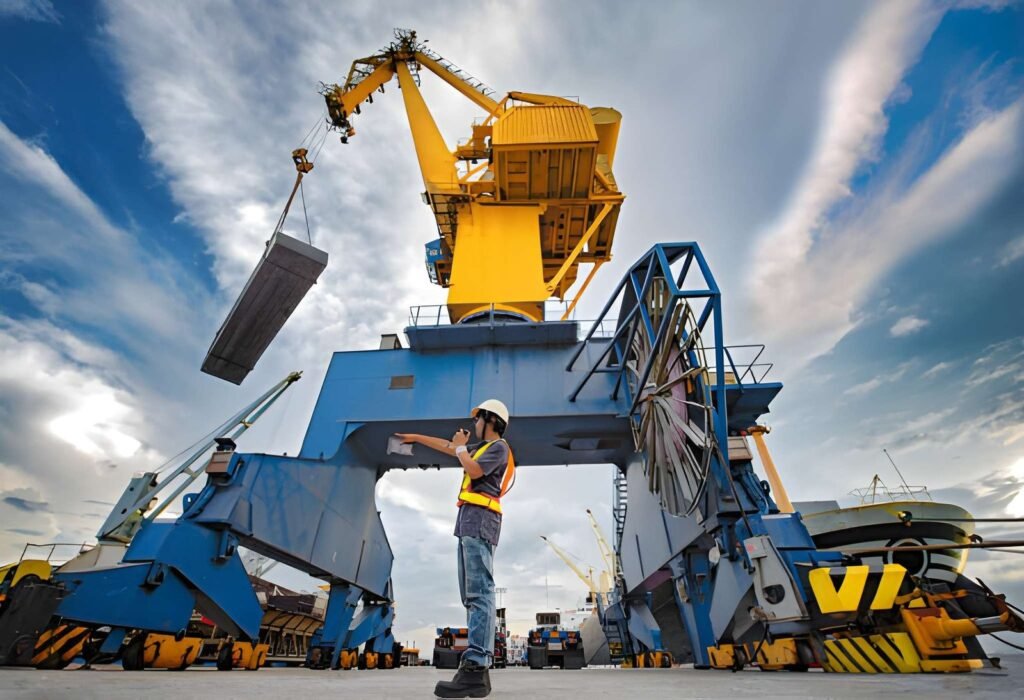
Modern cranes can lift containers, machinery, bulk materials, and oversized cargo in a fraction of the time required by traditional methods. This allows ships to be loaded and unloaded more quickly, reducing vessel turnaround times and increasing port productivity.
Faster cargo handling also helps logistics companies maintain delivery schedules and minimise costly delays.
Improved Port Throughput
Port throughput refers to the amount of cargo that can be processed within a specific period.
Advanced crane systems significantly increase throughput by enabling operators to move larger volumes of cargo more efficiently. Modern equipment can perform continuous lifting operations with minimal interruption, allowing terminals to handle increasing trade volumes without expanding their physical footprint.
Higher throughput translates directly into greater profitability and operational efficiency.
Handling Larger Cargo Loads
As shipping vessels become larger, crane technology must evolve to keep pace.
Today’s cranes are designed with higher lifting capacities, allowing ports to handle heavier containers and larger cargo shipments safely. Many modern systems can lift multiple containers simultaneously, reducing the number of lifting cycles required during loading and unloading operations.
This capability helps shipping terminals accommodate growing global trade demands while maintaining operational efficiency.
Enhanced Precision and Control
Modern cranes incorporate advanced control systems that improve accuracy during lifting operations.
Features such as:
- Load monitoring sensors
- Anti-sway technology
- Real-time positioning systems
- Automated control functions
- Intelligent load balancing
help operators move cargo safely and precisely.
Improved accuracy reduces the risk of cargo damage, minimises handling errors, and increases overall productivity.
What is the difference between a crane and a jib crane?
Automation Is Transforming Cargo Handling
Automation is one of the most significant developments in modern crane operations.
Many logistics facilities now utilise semi-automated or fully automated crane systems that perform repetitive tasks with exceptional consistency. Automated cranes can work continuously while maintaining precise movements and reducing human error.
Benefits of crane automation include:
- Increased operational efficiency
- Reduced labour costs
- Improved safety performance
- Consistent cargo handling
- Enhanced productivity
Automation also allows operators to manage equipment remotely from secure control centres.
Supporting Smart Logistics Operations
Modern crane systems are increasingly integrated with digital logistics platforms.
These smart systems communicate with:
- Warehouse management software
- Terminal operating systems
- Cargo tracking platforms
- Fleet management systems
- Inventory control software
This integration creates a seamless flow of information throughout the supply chain, helping businesses make better decisions and optimise cargo movements.
Improved Safety Across Shipping Yards
Safety is a critical concern in logistics and port operations.
Modern cranes incorporate numerous safety features designed to protect personnel, cargo, and equipment.
These include:
- Overload protection systems
- Collision avoidance technology
- Emergency shutdown functions
- Stability monitoring systems
- Wind speed monitoring sensors
By reducing manual handling and improving operational control, cranes help create a safer working environment for everyone on site.
Lower Operating Costs
Although cranes represent a significant investment, they often deliver substantial long-term savings.
Efficient crane operations reduce:
- Labour costs
- Vessel waiting times
- Equipment downtime
- Cargo damage
- Fuel consumption
Modern electric and hybrid cranes also offer improved energy efficiency compared to older diesel-powered systems, helping ports reduce operating expenses and environmental impact.
Adapting to Growing Trade Demands
Global shipping volumes continue to increase each year, placing additional pressure on ports and logistics providers.
Modern cranes provide the flexibility needed to handle changing cargo requirements. Many systems can be customised for:
- Container handling
- Bulk material transfer
- Heavy equipment lifting
- Breakbulk cargo operations
- Offshore logistics support
This adaptability helps businesses remain competitive in an evolving marketplace.
The Future of Crane Technology
The future of logistics will be shaped by smart ports and automated cargo handling systems.
Emerging technologies include:
- Artificial intelligence-driven crane controls
- Predictive maintenance systems
- Fully autonomous lifting operations
- Digital twin technology
- Advanced data analytics
These innovations will continue improving efficiency, safety, and sustainability across shipping and logistics operations worldwide.
Why Cranes Remain the Backbone of Global Logistics
Cranes are fundamental to modern logistics and shipping yard operations. Their ability to move heavy cargo quickly, safely, and accurately makes them one of the most important assets in global trade infrastructure.
As technology continues to advance, cranes will play an even greater role in supporting faster cargo handling, smarter logistics networks, and more sustainable port operations.
Improve Your Operations with Dubai Cranes
At Dubai Cranes, we provide reliable lifting solutions designed to improve productivity, safety, and efficiency across logistics, shipping, industrial, and construction sectors. Whether you require container handling equipment, heavy-duty lifting systems, or customised crane solutions, our experienced team can help you select the right equipment for your operational needs.
Contact Dubai Cranes today to discover how our advanced crane systems can help streamline your logistics operations and maximise performance.
Frequently Asked Questions
How do cranes increase efficiency in shipping yards?
Cranes reduce loading and unloading times by moving heavy cargo quickly and accurately, allowing ports to process more shipments in less time.
What types of cranes are commonly used in ports?
Common port cranes include ship-to-shore cranes, gantry cranes, mobile harbour cranes, and container handling cranes.
Can cranes operate automatically?
Yes. Many modern cranes use automation and remote-control technology to improve efficiency, consistency, and safety.
How do cranes improve workplace safety?
They reduce manual handling, use advanced safety sensors, and incorporate automated systems that minimise the risk of accidents.
Why are modern cranes important for global trade?
Modern cranes enable ports to handle larger vessels, process more cargo, reduce delays, and maintain efficient international supply chains.